Even though sleep takes up around one-third of our lives, it is often taken for granted. Yet sleep is crucial for rest and recovery. It is a time when we consolidate experiences, and, according to some theories, when dreams may reflect unconscious processes. Let’s take a closer look at this fascinating, mysterious part of our lives together.
Text by Jacek Wegrzynowski
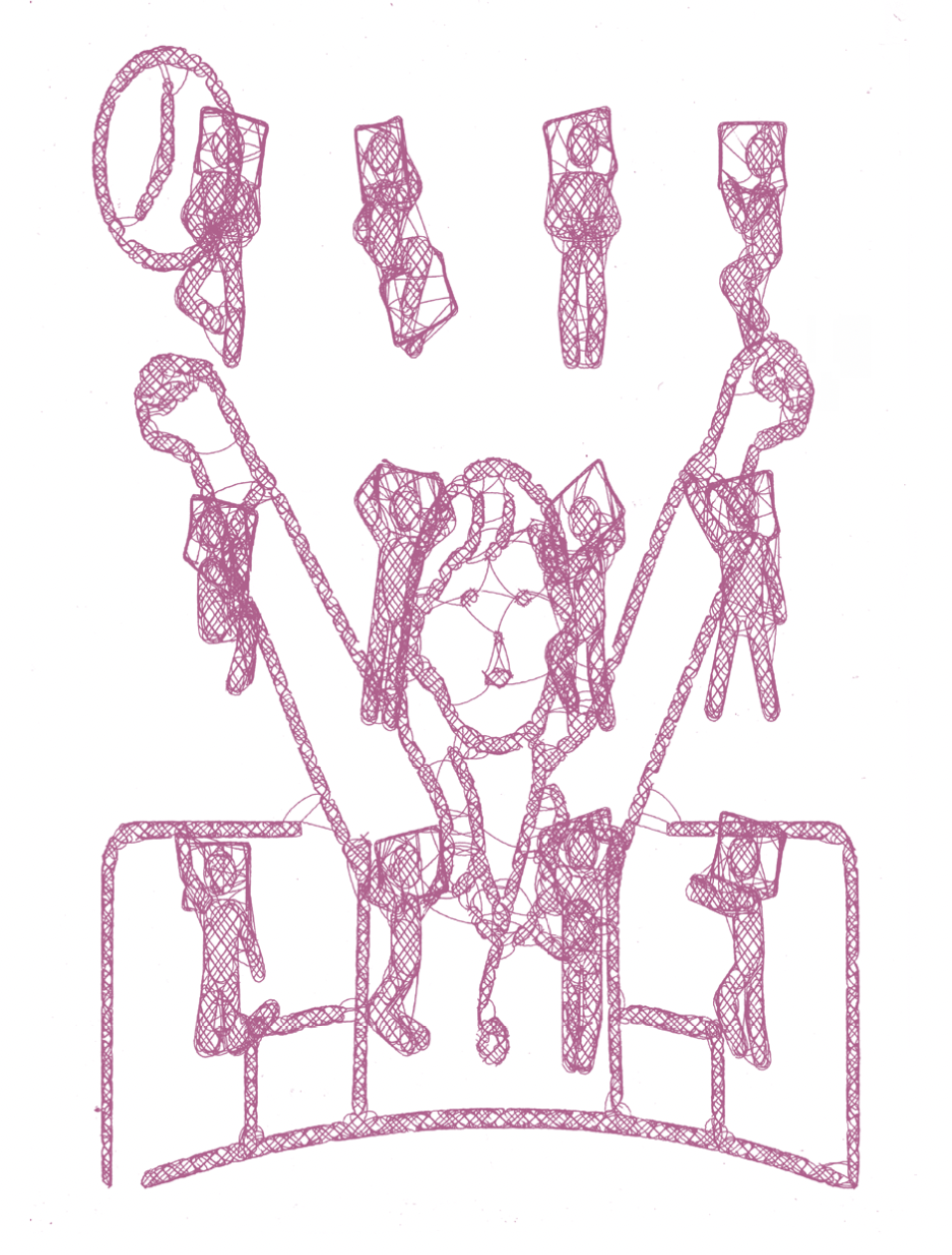
Illustration by Vikthor Thorud
Beginning with the signal that tells our bodies it is time to sleep: darkness. When it gets dark, our bodies naturally begin producing the hormone melatonin. Melatonin helps us relax, makes us feel sleepy, and prepares us for rest. This process is tied to our circadian rhythm: the internal clock that influences when we feel alert, productive, or tired. Circadian rhythms vary from person to person: some are «morning larks», most productive early in the day, while others are «night owls», thriving later. Of course, this distinction is not strictly binary, and most people fall somewhere in between.
This diversity makes sense from an evolutionary standpoint. Research on tribal communities shows that it is rare for everyone to sleep at the same time during the night. Some people stay up late, and as they go to sleep in the early morning, others begin to wake. This staggered pattern makes the tribe less vulnerable to potential dangers, since those awake can notice threats and alert the rest. Though this evolutionary strategy once kept us safe, our main challenge today is not predators, it is light.
Light vs. sleep
Today, people generally fall asleep safely at home without having to worry about nighttime dangers. Many can fall asleep safely at home. Similarly, we do not rely solely on the sun anymore, as artificial light is everywhere. The result? As our bodies use light as a key cue, our circadian rhythm is directly affected. Darkness helps prepare us for sleep, and morning light helps us wake. Artificial light at night, especially bright or blue-rich light, can delay the body’s clock and reduce sleep quality.
The blue light from screens can disrupt sleep quality, meaning it is generally recommended to stop using electronics one to two hours before bedtime. Using warm, dim light in the evening can help signal to the brain that it is time to wind down. Research suggests that blue-light filtering glasses or screen filters may help, though they’re less effective than avoiding blue light altogether. Interestingly, studies have found that popular night modes (like «night shift») haven’t been shown to reliably improve sleep. That is why managing our light environment has become such an important part of good sleep hygiene.
Dark hygiene in practice
One way to improve sleep quality is to use curtains or blinds to darken the room at night. Temperature also plays an important role in how well we sleep. If possible, do lower the room temperature before going to bed. Taking a warm shower before bedtime can also help, as the body cools down afterward, signaling readiness for sleep. It also helps to minimize unwanted noise at night, since disruptions reduce sleep quality.
But what about daytime naps? As it turns out, napping is not necessarily a bad thing. But it is important to nap smartly, keep them short, usually 20-30 minutes, which is the sweet spot for most people. It also helps to nap at the same time each day. Irregular timing (afternoon one day, evening the next) can disrupt nighttime sleep quality. Following these rules lets you enjoy the benefits of napping: restoring energy and boosting alertness. But to really understand why sleep matters, it helps to look inside sleep itself, at the stages we cycle through.
Sleep stages
Sleep is not a single state. It cycles through multiple stages. We start with light dozing (N1), the gateway to sleep, and then move into light-to-stable sleep (N2), where the brain begins processing and stabilizing new information. Next comes slow-wave sleep (N3), the deepest stage, which repairs tissues, strengthens immunity, and transfers memories from short-term to long-term storage. Later comes Rapid Eye Movement (REM) sleep, which supports creativity, emotional processing, and helps reduce the impact of stressful memories. Adults cycle through these stages roughly every 90 minutes: earlier in the night, there is more slow-wave sleep, and later, more REM.
Sleep also helps consolidate what we have learned during the day. During the day, the hippocampus1 takes in new material and encodes it into short-term memory. In deep sleep, the brain stabilizes what we have learned. In lighter N2 and REM sleep, it fine-tunes timing and patterns, which is especially useful for learning languages, practicing music, or mastering sports techniques. We can use this to our advantage, for example, by calmly reviewing material right before going to sleep.
Dreams and nightmares
Dreaming occurs in all sleep stages, but REM produces the most vivid and emotional dreams. During REM, the brain is highly active, while the body is paralyzed. Emotional centers like the amygdala are active and reduced noradrenaline levels create conditions for processing emotions and integrating memories. Nightmares, intense REM dreams that wake you, are more common in the second half of the night and are often triggered by stress, alcohol, or sleep loss. If they occur frequently and cause distress, they may signal underlying anxiety or trauma. By contrast, night terrors arise from deep N3 sleep early in the night, causing sudden shouting or confusion, and are usually forgotten by morning. They are uncommon in adults, and if frequent, may indicate an underlying sleep or health issue.
Sleep chronotypes: owls and larks
Of course, not everyone’s sleep looks the same; our body clocks differ. Some people are larks, sharpest in the morning, while others are owls, most alert late in the day. Although you can shift your chronotype slightly, it is usually best to work with your natural rhythm. Owls facing early classes or duties can benefit from: keeping a fixed wake time (even on weekends), gradually shifting bedtime earlier, getting sunlight soon after waking (like a short walk), exercising in the morning or afternoon, and avoiding caffeine later in the day. On the other side, larks with evening commitments can stretch their energy by getting extra light during the late afternoon or early evening, taking a short afternoon nap, having a small caffeine boost in the afternoon, and staying in bright environments until the tasks are done.
Seasons
In Norway, the seasons can strongly influence your circadian rhythm, meaning light management becomes an essential skill. During late spring and summer, sunlight at 22:00-23:00 signals to the brain that it is still daytime, delaying melatonin release and pushing sleep to later. Early dawn then cuts the last REM-rich part of the night short. During winter, on the other hand, weak and late sunrises allow melatonin to linger, leaving mornings heavy while reducing focus and mood.
There is no complete way to avoid these effects, but here are some ways to reduce them: During bright months, dim your apartment after dinner, wear sunglasses if you’re out late, and make your bedroom as dark and cool as possible, for example, with blackout curtains. During dark months, seek bright light right after waking up. If daylight is scarce, you can try using a daylight lamp or a dawn-simulating alarm clock. During the whole year, aim for a steady wake-up time (+/- 30 minutes), which helps align deep sleep with the early part of the night and REM with the later hours. Whether it is summer sun or winter darkness, our environment constantly shapes the way we sleep, but in the end, the basics remain the same.
Conclusion
Sleep is more than rest. Sleep is when our bodies recover, our minds learn, and our memories settle in. You do not need to change everything at once. Even a small habit, like dimming the lights earlier or keeping a regular wake-up time, can make a real difference. So next time darkness comes, think of it less as the end of the day and more as the start of something essential!
- Hippocampus is a small, seahorse-shaped part of the brain that helps you form new memories, find your way around, and link experiences so they make sense later. ↩︎