The ecological decline of the Oslofjord has become one of Norway’s most widely discussed conservation challenges. What does fishing have to do with it?
Text by Andreas Bjørge Dyrøy
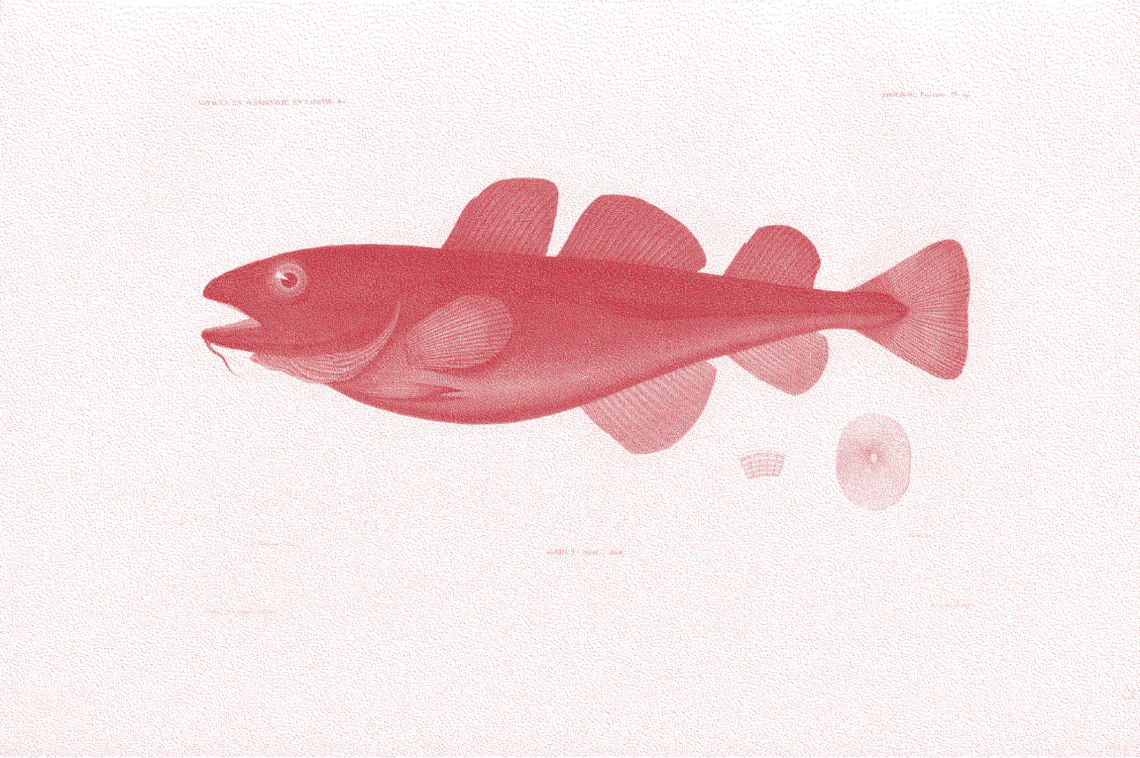
Once known for abundant coastal fish stocks, cold-water kelp forests and accessible recreational fishing, the fjord is now characterized by collapsing marine ecosystems, eutrophication, and a marked reduction in biodiversity. In response to this degradation, the Norwegian government has decided to implement a comprehensive fishing prohibition from January 2026.1 The measure has been presented as an urgent, science-based intervention to halt ecosystem decline and facilitate recovery of vulnerable species such as the Atlantic cod (Gadus morhua). However, the ban has also sparked controversy among fishers, coastal communities, conservationists, and scientists who disagree on both the scientific justification and the expected ecological effectiveness of the prohibition.
Scientists or citizens?
For the past ten years I have been an active recreational angler in the inner Oslofjord, spending countless hours wading along shallow beaches with a fly rod in search of sea trout. Through this time, I have witnessed the ecological changes in the fjord first-hand. The gradual loss of kelp, the decline of small fish and invertebrates, and the shifting ways that people interact with the coastline. Despite these changes, many of my most meaningful outdoor experiences have come from practicing low-impact, catch-and-release fly fishing on what remains a reasonably robust sea trout population. As someone who depends on the fjord for both recreation and a sense of connection to nature, I am personally invested in the debate. I also find myself caught between two identities: the ecologist-in-training who recognizes the need for strong conservation measures, and the committed angler who is unsure whether he will strictly follow the new prohibition or slip into becoming, technically speaking, a “criminal fisherman” for choosing a practice he believes causes no measurable harm.
Will ten years of fishing prohibition fix the ecological problems in the Oslofjord?
The ecological condition of the Oslofjord has undergone a dramatic decline over the past decades, and understanding these underlying processes is essential for evaluating whether a full fishing prohibition can meaningfully contribute to recovery. Historically, the fjord supported extensive eelgrass beds, kelp forests, and diverse coastal fish communities, including healthy populations of cod, whiting and sea trout. Today, however, the fjord is widely considered to be in a state of ecological crisis. Monitoring programs document severe losses in benthic biodiversity, reductions in water clarity, ecosystem shifts towards opportunistic species and the near-collapse of several key habitats.2
One of the primary drivers of decline is excessive nutrient loading, particularly nitrogen, originating from wastewater, riverine runoff, agriculture and industrial discharges. Elevated nutrient levels have led to eutrophication, frequent algal blooms and periodic oxygen depletion in deeper basins, conditions that suppress sensitive species and create unstable food-web dynamics. Also, according to a report done for Miljødirektoratet, 24,642 individual physical interventions have been carried out along the shoreline over the past 50–70 years, affecting 3,366 nature-type localities and leaving only a minority of eelgrass meadows and soft-bottom habitats untouched.3 Recent biodiversity assessments further illustrate the changing ecological landscape: An eDNA-based study identified 63 fish species in the Oslofjord, demonstrating that species richness remains relatively high even as ecological conditions deteriorate. However, the composition has shifted: warm-tolerant, generalist and opportunistic species are increasing while cold-water specialists, including coastal cod (Gadus morhua), continue to decline. This pattern is consistent with broader ecological theory, which predicts that environmental stressors such as temperature rise, eutrophication and habitat fragmentation favor generalist species at the expense of specialists.
While historical overfishing and trawling contributed to earlier reductions in cod stocks, current evidence shows that habitat degradation, pollution and climate-related changes now play far more significant roles. The HI report notes explicitly that there is no documented evidence that recreational fishing for pelagic species such as mackerel has a measurable negative effect on the fjord’s ecological state.2
Does the fishing ban target the real drivers?
No-take zones are among the most widely studied tools in marine conservation, and global evidence consistently shows that this form of protection can increase biomass, reproductive capacity and species density across a range of ecosystems.4 A meta-analysis from Table Mountain National Park demonstrated that no-take zones often lead to larger fish, higher population densities and more complex ecological communities, particularly when combined with habitat protection and long-term enforcement.5
Similar patterns emerge from freshwater and theoretical work and modelling studies show that protected areas can shift populations away from unstable states when exploitation is a dominant stressor.6 From a broad conservation-science perspective, the principle behind the Oslofjord ban is therefore well aligned with international evidence. However, the transferability of global MPA effects to the Oslofjord is not straightforward: As documented by Havforskningsinstituttet, fishing, particularly low-impact recreational rod fishing, is not identified as a primary driver of ecological decline.2
Only 663 of 2,045 soft-bottom sites and 329 of 1,089 eelgrass meadows remain untouched by human activity, illustrating how habitat degradation, not angling, has been the dominant ecological force shaping species decline. In systems where external stressors overshadow fishing pressure, banning fishing is unlikely to yield the kinds of ecological benefits observed in successful global MPAs.
Emerging political developments further complicate the ecological justification for a blanket ban. Several Norwegian media outlets have highlighted the inconsistency between restricting recreational fishing and simultaneously approving substantial industrial discharges. While the government is banning fishing “to save the fjord,” it has approved new nitrogen-rich emissions from the weapons manufacturer Chemring Nobel – precisely the kind of nutrient loading identified as a major ecological driver. Naturvernforbundet’s formal complaint documents that Chemring Nobel has been permitted to release up to 200 tonnes of nitrogen per year, making it one of the region’s most significant point-source contributors. 7
From a conservation-policy perspective, this case illustrates what ecologists describe as visibility bias: the political tendency to regulate visible, easily targeted behaviors, such as recreational angling, while neglecting the structural drivers that are less visible but far more ecologically consequential. Stakeholder-focused critiques amplify this concern. The political party Rødt notes that “fishers have good reason to be angry,” arguing that the ban disproportionately affects those with the least environmental impact.8 Naturvernforbundet likewise criticises the emission approval for violating key principles in Norwegian environmental law, particularly the cumulative impact requirement under naturmangfoldloven §10 and the polluter pays principle under §11, thereby challenging the legitimacy and fairness of the current regulatory approach.7
The human dimension of conservation in the Oslofjord
While management debates around the Oslofjord often focus on ecological indicators, the human dimension is equally important in determining long-term conservation success. Recreational use, particularly low-impact activities such as rod fishing, has historically played a significant role in shaping people’s connection to the fjord. For many users, including myself, recreational fishing has provided direct, long-term engagement with the fjord and has made ecological changes visible in ways that scientific reports alone cannot.
A growing body of literature emphasizes that access to nature is not only a cultural ecosystem service but also, a mechanism that strengthens public support for conservation. Outdoor recreation inspires strong emotional responses in people, leading to advocacy for ecosystem-scale conservation.9 Restricting low-impact recreational activities may therefore undermine one of the fjord’s most important conservation assets: an informed, engaged local community. When people lose opportunities for nature-based recreation, their sense of ecological connection weakens, reducing both willingness to comply with regulations and participation in citizen science initiatives. This is particularly relevant in the Oslofjord, where anglers often serve as informal monitors, reporting pollution, habitat loss, invasive species, and unusual ecological events. In this context, recreational fishing emerges not as an ecological threat but as a potential ally in conservation.
Conclusions and possible paths forward
The ecological decline of the Oslofjord is real, urgent, and well documented, yet the 2026 fishing prohibition does not sufficiently target the drivers most responsible for this deterioration. Scientific assessments point clearly towards nutrient loading, habitat loss and cumulative physical disturbance as the principal pressures, while recreational rod fishing only has a small effect on the fjord’s ecological trajectory. As a result, the ban risks becoming a politically visible but ecologically imprecise tool, one that restricts low-impact users while allowing structurally significant stressors, such as industrial emissions and long-term habitat modification, to continue largely unabated.
A more effective management strategy would combine targeted restrictions with broader ecosystem-based interventions. These could include species-specific closures for vulnerable stocks such as the current closure for cod, seasonal restrictions on specific areas during spawning periods, strict regulation of nitrogen emissions, particularly from industrial point sources, habitat restoration of eelgrass and kelp, and continued prohibition of destructive practices such as bottom trawling. Within this framework, permitting low-impact, catch-and-release rod fishing for species with demonstrably robust populations such as mackerel and sea trout, would align the regulation with both ecological evidence and the social dimensions of conservation.
Conservation in a human-dominated fjord requires not only ecological accuracy but also social legitimacy. Outdoor recreation, including recreational fishing, fosters stewardship, enhances ecological awareness, and maintains the public’s connection to coastal ecosystems. For those reasons, and based on both scientific evidence and personal experience, my answer to the question posed at the beginning of this essay is clear. Yes, I will probably become a “small-time criminal” angler come January, but only in the sense that I will continue practicing responsible, low-impact fishing on healthy stocks. In my view, this approach is not only ethically defensible but also more ecologically aligned than the fishing prohibition itself.
References
- Regjeringen. (2025). Regjeringen innfører nullfiskeområder i Oslofjorden. Tilgjengelig fra: https://www.regjeringen.no/no/aktuelt/regjeringen-innforer-nullfiskeomrader-i-oslofjorden/id3115111/ (lest 23.10.25). ↩︎
- Havforskningsinstituttet. (2024). Bestilling Oslofjorden: Økologiske effekter av alternative forvaltningstiltak. ↩︎
- Heid, S. & Edvardsen, F. (2024). Kartlegging av fysiske inngrep i gruntvanns- områder i Oslofjorden. ↩︎
- Roberts, C. M. & Gell, F. R. (2002). The fishery effects of marine reserves and fishery closures. Bulletin of Marine Science, 70. doi: 10.5343/bms.2002.7001. ↩︎
- Baliwe, N. G., Pfaff, M. C. & Branch, G. M. (2022). Assessing the effects of no-take zones in a marine protected area spanning two ecoregions and rock substrate types. Frontiers in Marine Science, 9. doi: 10.3389/fmars.2022.893260. ↩︎
- Takashina, N. & Mougi, A. (2015). Effects of Marine Protected Areas on Overfished Fishing Stocks With Multiple Stable States. Theoretical Ecology. doi: 10.48550/arXiv.1501.06145. ↩︎
- Naturvernforbundet. (2024). Klage på utslippstillatelse til Chemring Nobel. ↩︎
- Moxnes, B. (2024). Fiskerne har god grunn til å være sinte. Tilgjengelig fra: https://roedt.no/blogg/fiskerne-har-god-grunn-til-a-vaere-sinte (lest 1.12.25). ↩︎
- Raynal, J. M., Weeks, R., Pressey, R. L., Adams, A. J., Barnett, A., Cooke, S. J. & Sheaves, M. (2020). Habitat-dependent outdoor recreation and conservation organizations can enable recreational fishers to contribute to conservation of coastal marine ecosystems. Global Ecology and Conservation, 24. doi: 10.1016/j.gecco.2020.e01342. ↩︎